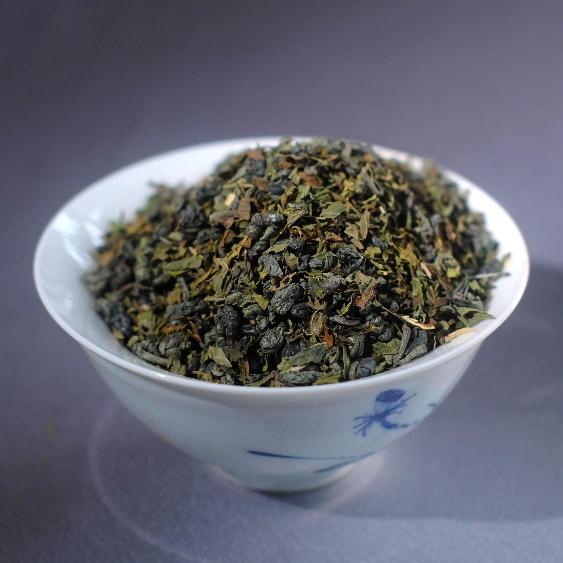


Our Chai Nanna (from the Moroccan Arabic atay bil naânaâ, or tea with mint) is a refreshing brew, made with Chinese Gunpowder green tea and spearmint. It is wildly popular and a massive part of the culture in the Greater Maghreb region, encompassing Morocco, Tunisia, Algeria, Libya and Mauritania.
It is traditionally lavishly sweetened and served in a tea glass. Adding a wee sprig of fresh mint to our already tasty blend will enhance its flavour yet further.
Mint gives Chai Nanna its instantly recognisable, refreshing character — cool, aromatic, and clean on the palate, balanced by the malty depth of gunpowder green tea. As gunpowder tea leaves are tightly rolled, they contain more leaf per cup than most other green teas, giving Chai Nanna a naturally higher caffeine content — a bright, energising cup any time of day. Perhaps this explains why Chai Nanna has become so popular in the warm climate of North Africa: a hot cup on a warm day is a genuine local tradition, and drinking it iced makes an equally refreshing mix any time of year.
Tea first arrived in North Africa via The Silk Road, the name applied to the wide network of trading routes that connected East and West for many centuries. It remained in large part a luxury beverage of the ruling classes until the 18th or 19th Century, by which time the British East India Company had come to dominate the tea trade. They introduced Gunpowder green tea into North Africa sometime around the late 18th century, via the great Moroccan port of Essaouira. Although initially still viewed as a luxury product and status symbol, over time its increasing affordability and refreshing taste in a warm climate meant that its popularity quickly spread and became adapted to local traditions. Already in the 1840s, the explorer James Richardson described tea as an “article of universal consumption” in Morocco, and said that “Even in remote provinces, amongst Bebers and Bedouins…, the finest green tea is to be found.” By the 1880s tea and sugar, which Moroccans tend to add to their tea in copious quantities, accounted for a quarter of the country’s total imports!
These days, Nanna tea has become the primary symbol of Moroccan hospitality and generosity. It is standard practice in that part of the world for family and friends to meet for tea multiple times every day, making time for one another and strengthening social bonds, as well as for it to be served in shops, markets and when welcoming guests. The tea is traditionally served by the male head of the family, in a ritualised fashion known as Atai. It is prepared carefully and patiently then poured from a great height, as doing so not only forms bubbles that aerate the tea and provide “texture”, but also provides a bit of theatre. It allows the host to show off their skill in being able to land the liquid in the small, finely decorated glasses that are generally used, thereby displaying their dedication to the pleasure of their guests. It is said that in pouring the tea, they also pour out their hearts.
Once served, the tea is sipped slowly, providing plenty of opportunity for reflection and communication. The host usually continues to serve until everyone has had three glasses, each of which has a different character as the leaves go through their multiple infusions. This process is beautifully described by a famous local proverb, which states that,
The first glass is as gentle as life,
the second is as strong as love,
the third is as bitter as death.
In North Africa, and indeed throughout the Middle East, tea time is seen as a vital communal activity, allowing families and friends to spend time together, fostering inclusivity and camaraderie. It is a way of welcoming strangers and is seen as a refined expression of hospitality, to the extent that to refuse an offer of tea can be taken as an insult. It is often commented that the tea tradition there bridges differences and allows people with different backgrounds or worldviews to come together in a spirit of mutual respect. The special atmosphere of hospitality and conviviality that is produced encourages dialogue and shared understanding, thereby breaking down social barriers, for a while at least.
All put together, it can be seen that Chai Nanna is a potent brew, which also happens to taste absolutely lovely. You’d be totally menthol not to buy some!
Nana is Arabic for mint — the name reflects the tea’s key ingredient.
Yes — the gunpowder green tea base gives it a naturally higher caffeine content than most other green teas.
Check out more of our homemade tea and herbal recipes here:
And if you prefer your green tea pure and unadulterated, you can find Gunpowder in our Green Tea section here: